

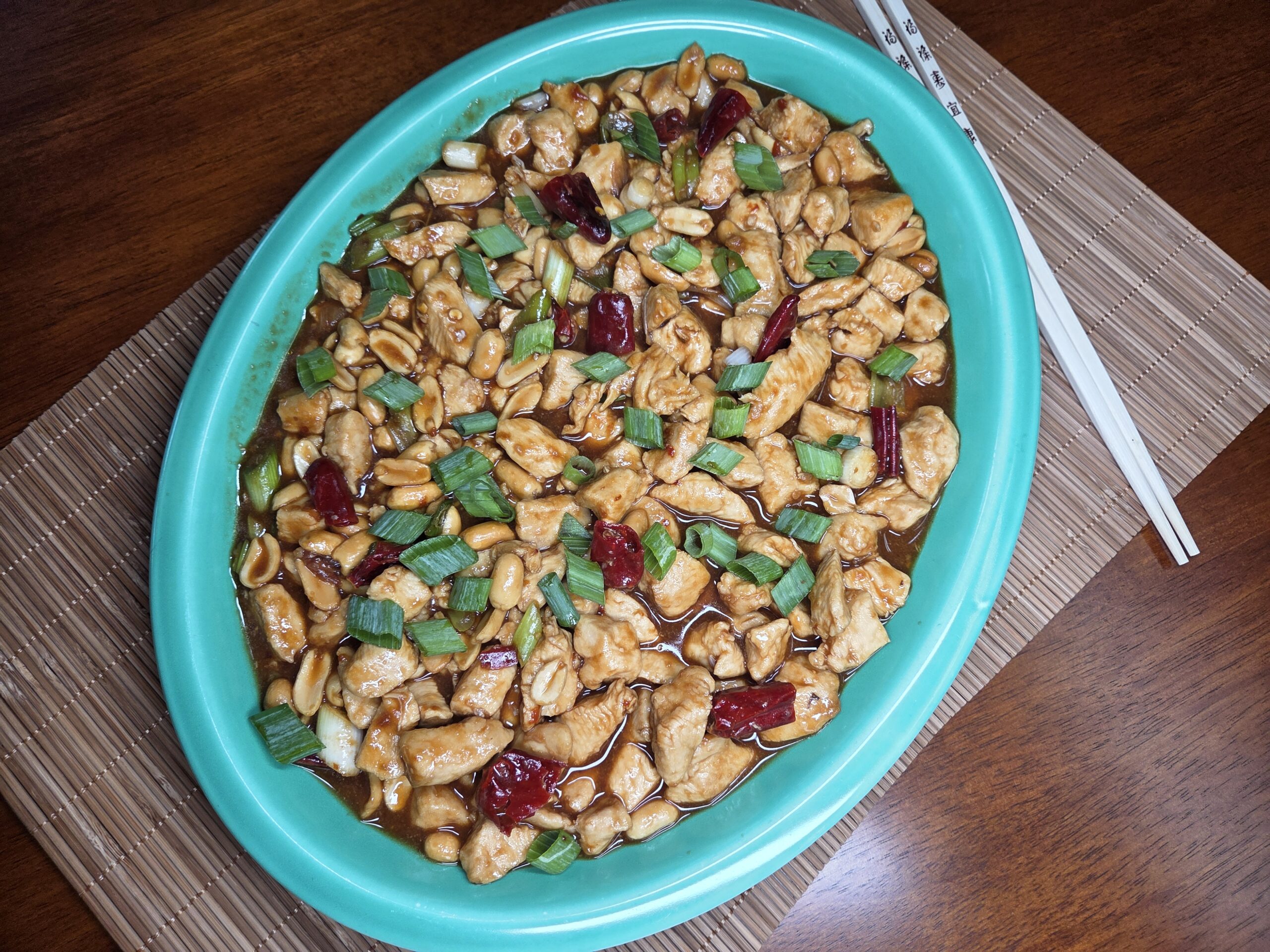
-
Prep Time15 minutes
-
Cook Time35 minutes
-
Serv SizeYield 4-6 servings
Easy Kung Pao Chicken delivers bold spicy, salty, savory, and sweet flavors in every bite!
Ingredients
For Chicken & Marinade
For Sauce & Other
Directions
Kung Pao Chicken is one of those dishes that hits every corner of your palate—salty, sweet, tangy, spicy, and just the right amount of numbing heat from Sichuan peppercorns. It’s bold, aromatic, and surprisingly easy to make at home once you understand a few key techniques. This version leans into authentic Sichuan flavors while staying weeknight‑friendly, with tender velveted chicken, fragrant chili‑infused oil, and a glossy sauce that clings to every bite. And because I love a saucy finish, it’s just as good served over steamed rice as it is tossed with spaghetti for a California‑style fusion twist.
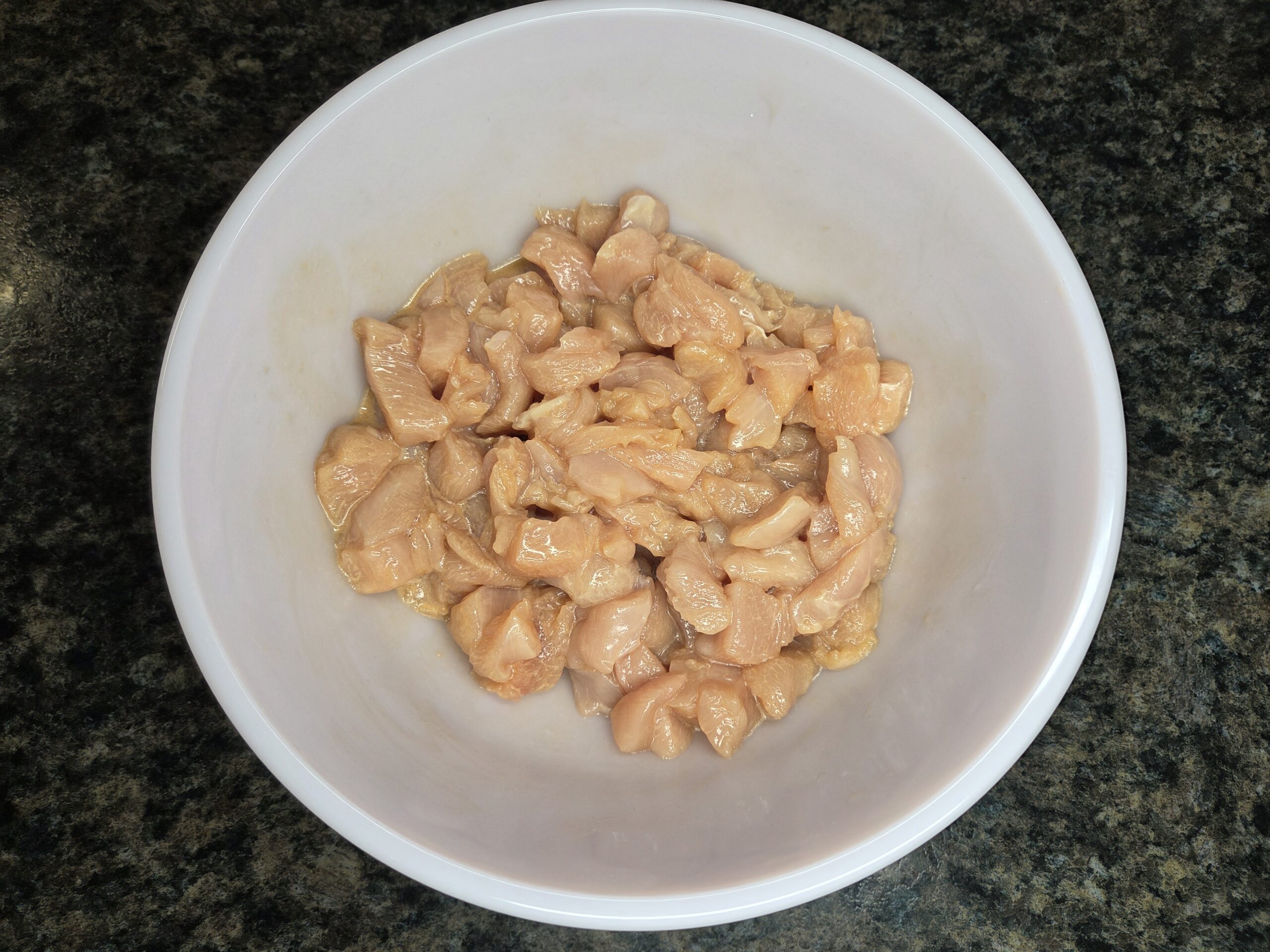
Velvet the chicken by cutting it into bite‑sized pieces. In a medium bowl, combine 1 tablespoon Shaoxing wine (or dry sherry), 1 tablespoon soy sauce, 1 teaspoon neutral oil such as avocado or vegetable oil, and 1 teaspoon cornstarch. Stir until the chicken is evenly coated and let it marinate. For 10-20 minutes. Velveting is a simple Chinese cooking technique that coats the chicken in a mixture of wine, soy sauce, oil, and cornstarch to keep it tender and silky during high‑heat cooking. This protective layer prevents the meat from drying out, so the chicken stays juicy, smooth, and restaurant‑quality.
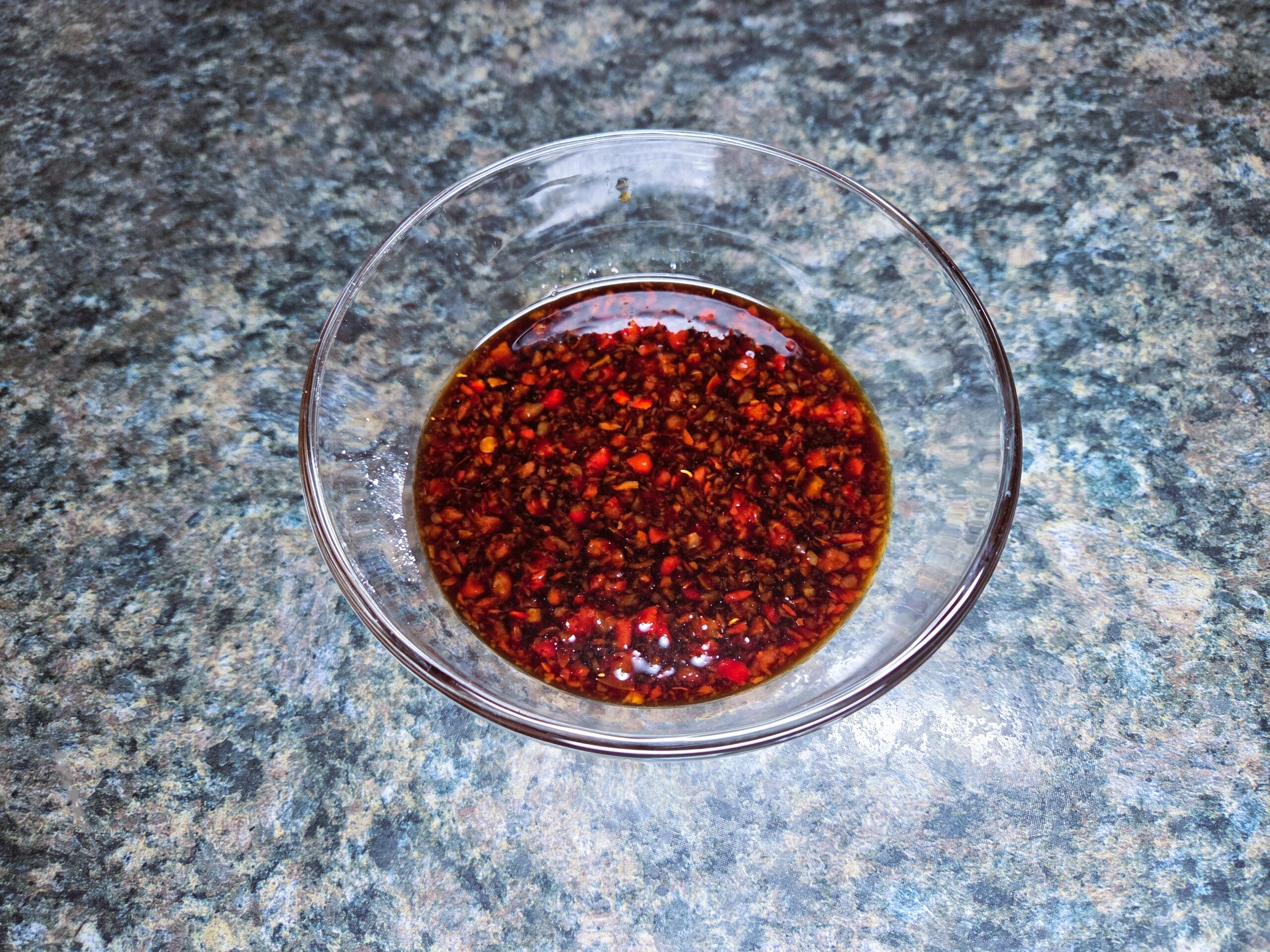
To make the Sichuan chicken sauce, add 1 tablespoon light soy sauce, 1 tablespoon dark soy sauce, 1 tablespoon Chinkiang black vinegar or balsamic vinegar, 1 tablespoon sugar, 1 tablespoon sambal oelek, 2 tablespoons of water, and 1 teaspoon cornstarch to a medium bowl. Stir until everything is fully combined, then set the sauce aside.
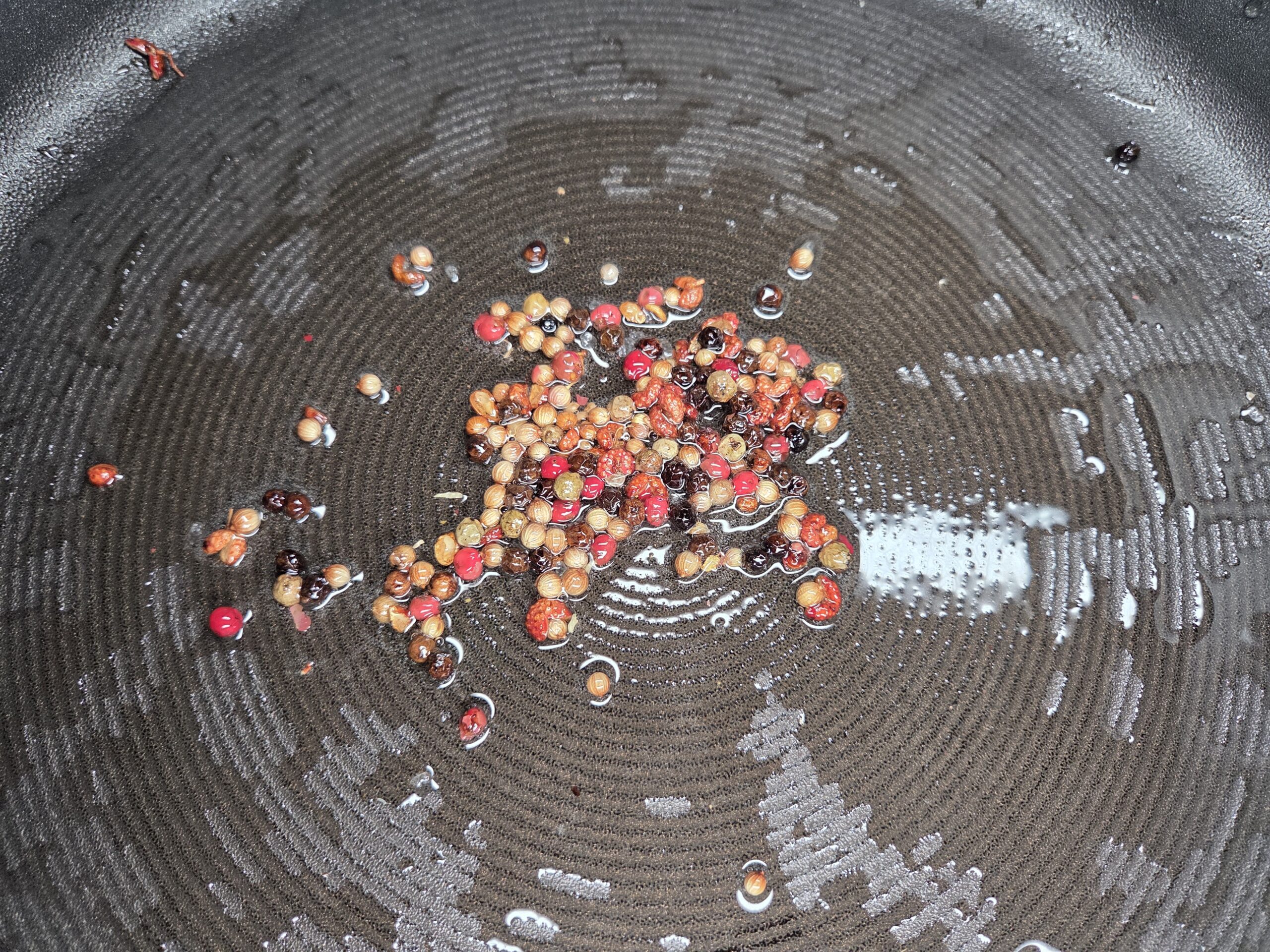
Heat 2 tablespoons of neutral oil in a large skillet or wok—the same pan you’ll use for the full stir‑fry. When the oil is warm over medium‑low heat, add 1 tablespoon of Sichuan peppercorns and let them toast gently. Allow them to bubble in the oil for a couple of minutes, watching closely so they don’t burn. This step infuses the oil with their signature citrusy aroma and deep, numbing flavor. Sichuan peppercorns are known for their má effect, a pleasant tingling sensation that enhances chili heat and gives authentic Kung Pao Chicken its iconic numbing‑spicy character. Once the oil is fully infused, remove the peppercorns with a slotted spoon, discard them, and keep the fragrant oil in the pan for the next step.
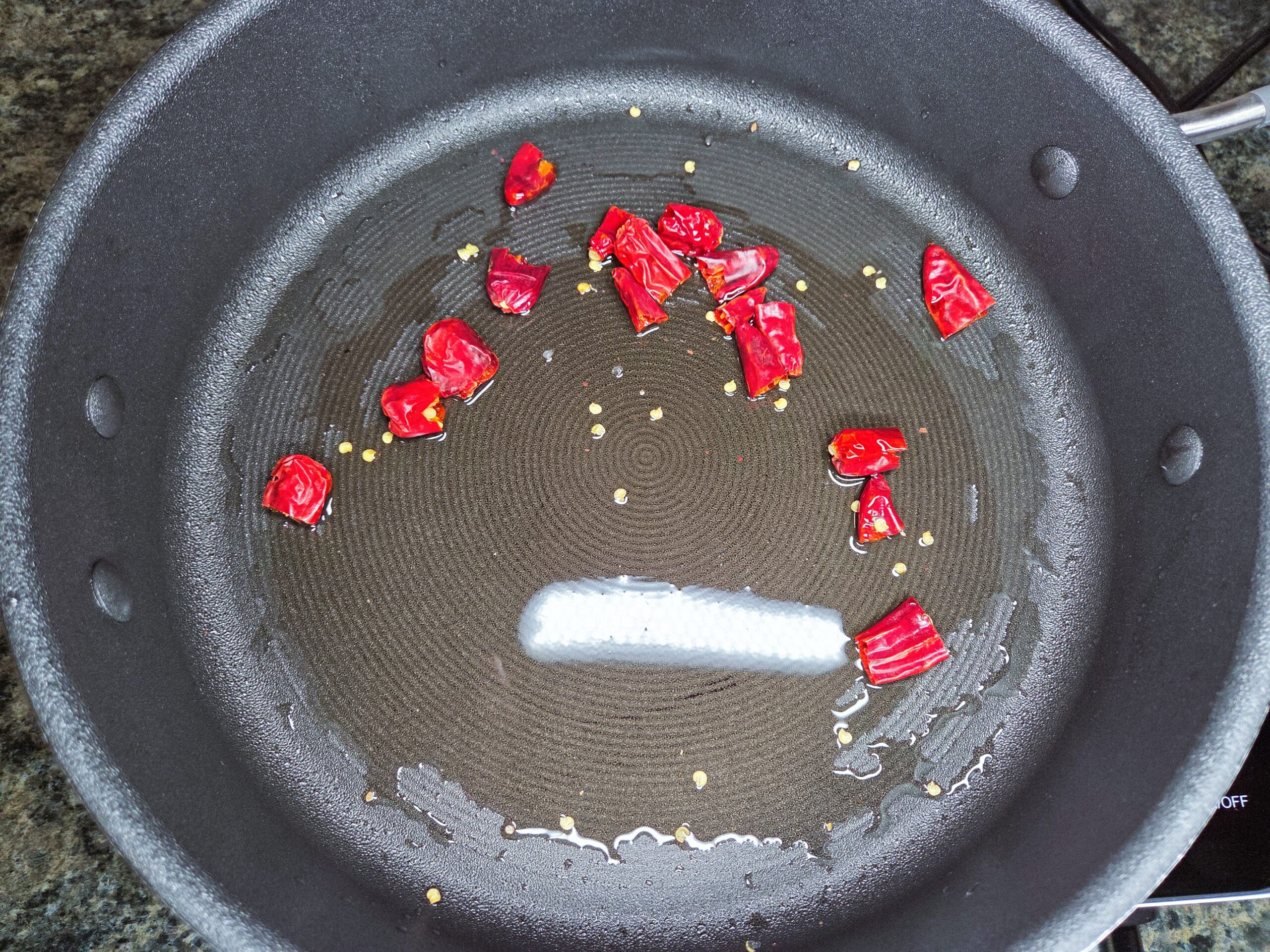
Add the desired amount of Sichuan dried chilies to the infused oil and let them cook for about a minute to release their heat and aroma. I typically use around 8 chilies with most of the seeds removed, but you can adjust the number up or down depending on how spicy you like your Kung Pao Chicken. Removing the majority of the seeds keeps the flavor bold without overwhelming heat. After the chilies have had a moment to bloom in the oil, add the marinated chicken directly to the pan and continue with the stir‑fry.
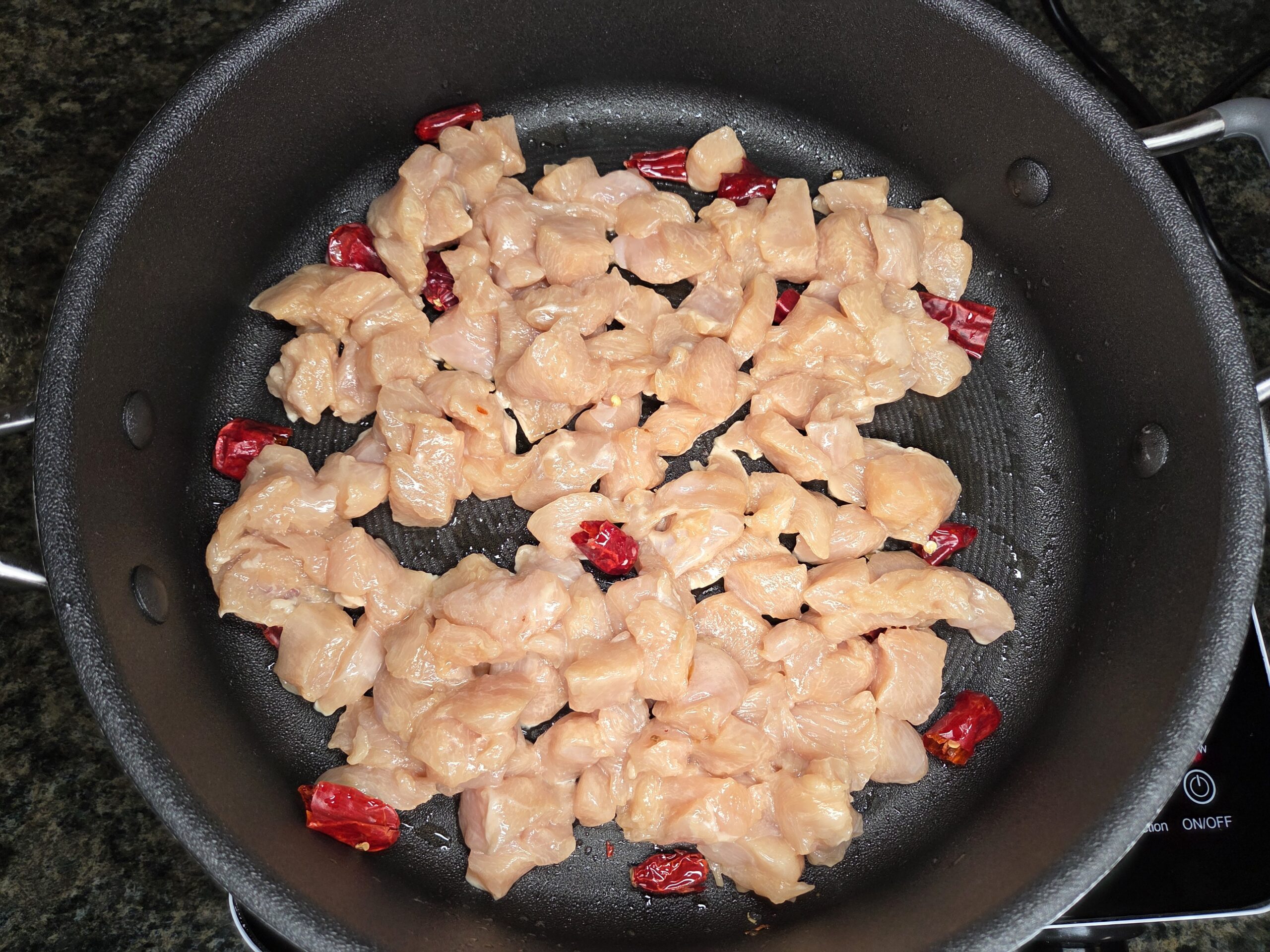
Add the chicken to the pan and stir‑fry it over medium-high heat in the fragrant chili oil until it’s almost cooked through. The pieces should turn opaque and lightly golden, but still have a little cooking left in them so they stay tender when you add the sauce.
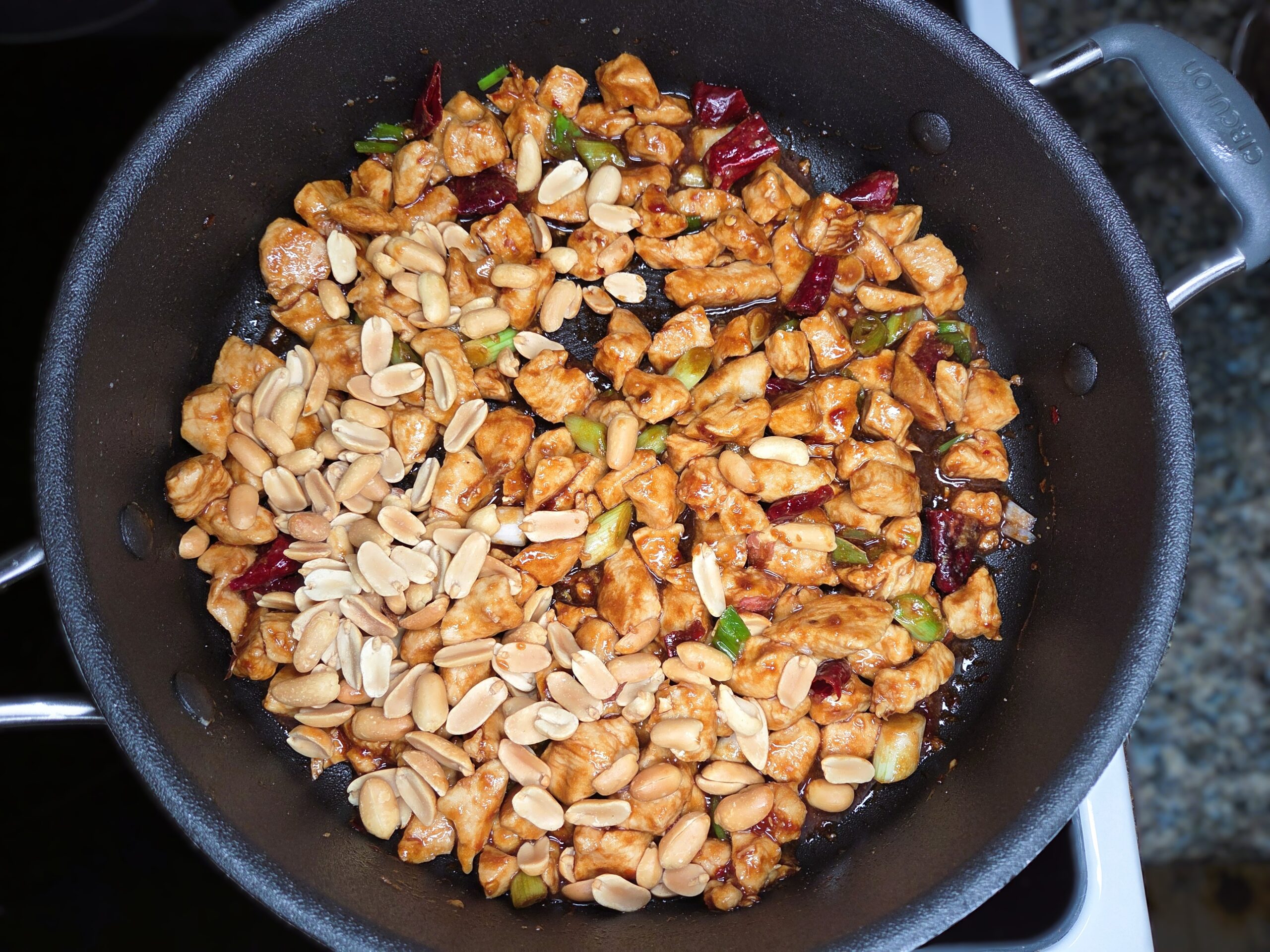
Once the chicken is almost cooked through, add 3 minced garlic cloves, 1 tablespoon minced ginger, and the white portions of the green onions. Stir‑fry for 1–2 minutes until fragrant. Pour in the prepared sauce and stir to coat the chicken evenly. Add ½ cup of roasted peanuts and continue cooking until everything is combined and the sauce thickens and clings to the chicken.
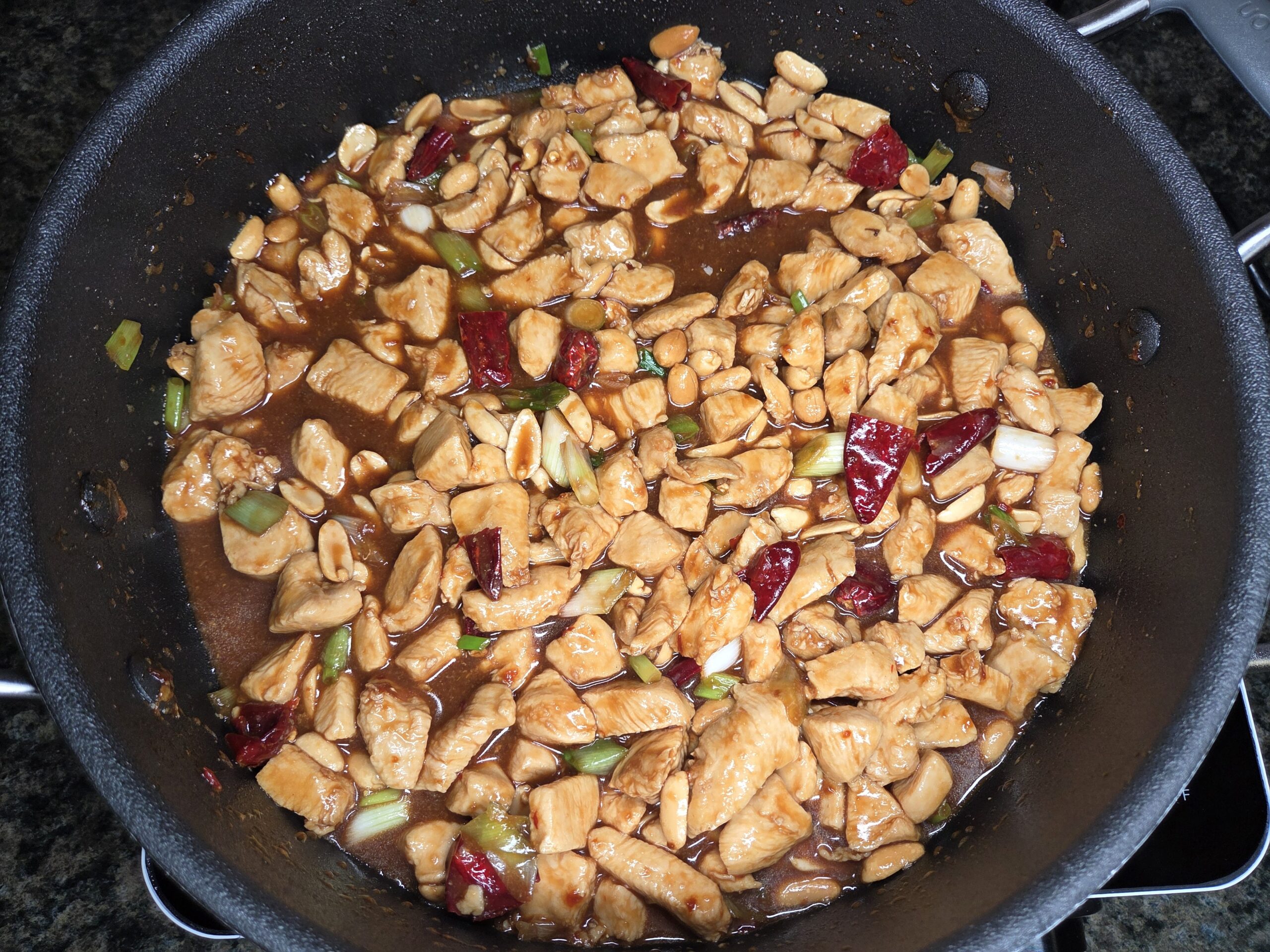
Lastly, stir in ¼ to ½ cup of chicken broth. I prefer my Kung Pao Chicken on the saucier side so I can toss it with spaghetti (1/2 lb), but if you like a drier, more traditional finish, simply use less broth. Let the sauce simmer for 2–3 minutes, allowing it to thicken and coat the chicken. Remove from the heat and serve immediately with steamed rice, or toss the chicken and sauce with cooked, drained spaghetti for a fusion twist inspired by California Pizza Kitchen and sprinkle with the remaining dark green onions.
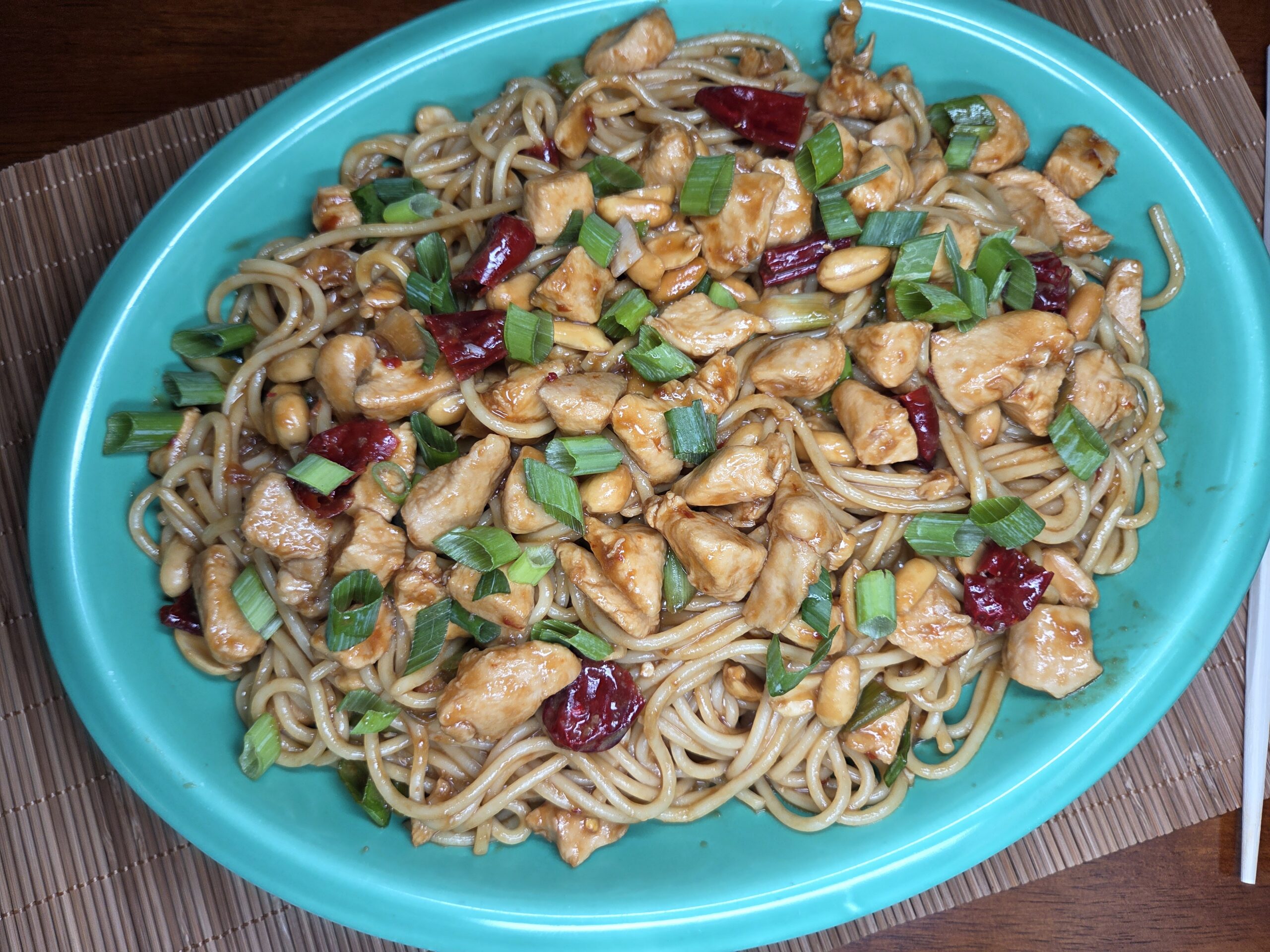
Enjoy!
For more Asian‑inspired dishes, here are a few of our favorites:
Conclusion
Kitchen Tools :Need some tools or ingredients to make this recipe? Use my Amazon Affiliate links to shop. I will make a small commission and it doesn't cost you any extra. Thank you for visiting.
Napa Valley Naturals Avocado Oil Ginger Puree Paste Mosser Jade 3 Piece Mixing Bowl Set Circulon A1 Series Induction Large Saute Pan 5-Quart Bamboo Table Mat Placemat

Leave a Review